

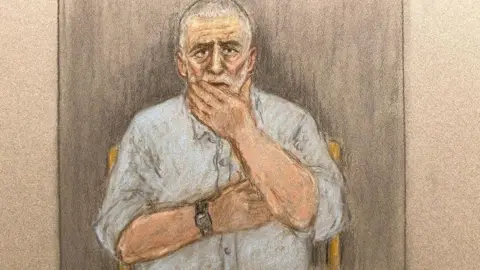
For someone who's sacrificed approximately 40 years of his life due to a crime he had no involvement in, Peter Sullivan strikes a remarkably optimistic attitude.
During our encounter last month, for what was his initial media appearance since being liberated from prison in May, he was enthusiastic and looking forward to getting to Anfield to watch Liverpool play for the first time since he was taken into custody in 1986.
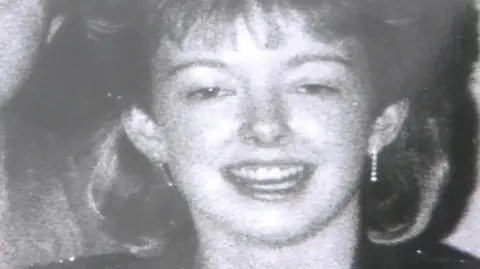
That was the year of the sexual attack murder of Diane Sindall in his home town of Birkenhead - an event he said he was merely aware of because someone turned to him in a pub at the time and said, "reportedly there's been a murder".
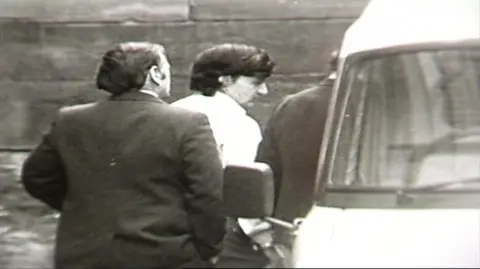
When he was sentenced the following year at Liverpool Crown Court - he was sentenced to a indefinite period in some of Britain's highest-security category A prisons where he would be tormented by his tabloid nicknames "Birkenhead's Monster", "The Mersey Ripper" and "The Wolfman".
Adapting to a Modern World
Before our interview, he was abundant with tales about how since his release he has had to adapt to a completely different world.
When he was taken into custody, Margaret Thatcher was in Downing Street, few knew about the internet and Europe was still partitioned by the Iron Curtain.
He described watching the demolition of the Berlin Wall from a shared television in prison.
Mr Sullivan explained how trips to the shops now show how "society has evolved" - from trying to work out how self-checkouts work to realising that "rather than having a cheque book, you've got it on your phone".
Technological Challenges
His imprisonment means he has been ignorant of the way so many facets of everyday life have transformed - almost like someone who has been asleep since the 1980s.
"Having endured so long in prison and finding out there's no DHSS [Department of Health and Social Security, now the Department for Work and Pensions (DWP)] where you can pick up your money - you're thinking, 'Wow, what's going on here?'"
He now has a digital phone, after discovering doctor's appointments need to be booked on something he now knows is called an 'app'.
He first became knowledgeable about them when he was traveling on a bus shortly after his release and saw people operating smartphones. He only recognized they were phones when he saw someone put one to their ear.
Psychological Impact
Mr Sullivan's 14,000 days in custody have also led to an unavoidable sense of prison conditioning.
He recalled how after his freedom, one morning in his flat he returned to his bedroom and positioned himself on his bed, because he was automatically waiting for a prison officer to come and lock him back into his cell.
"It's required to be at your door at a designated moment, otherwise the officers will yell at you", he said.
"I found myself thinking, 'Why am I here?'"
Desiring Closure
But Mr Sullivan's hope is tempered by a desire for answers about how he was charged with an high-profile murder that he didn't commit, and a bewilderment about why he still has not had an apology.
"I've lost everything", he said.
"My liberty was taken, I lost my mother since I've been in prison, I've lost my father.
"It hurts because I was absent for them", he said.
"It's impossible to continue with my life if I can't get an explanation off them."
"My only request, an apology [and to understand] the explanation for they've done this to me", he said.
Law Enforcement Response
Merseyside Police said "limited value to be gained for a reassessment of this matter today" because of "advancements to investigative techniques and developments in the law over the last 40 years".
The force did refer some of Mr Sullivan's accusations to the police regulatory agency, the Independent Office for Police Conduct (IOPC), who will now investigate his claims that officers assaulted him and threatened to link him to other crimes if he didn't plead guilty to Diane Sindall's murder.
When asked if it would express regret, the force did not specifically respond the question, but as part of a detailed response it said: "The force regrets that there has been a serious failure of justice in this case".
Looking Ahead
Mr Sullivan explained about his simple goal - an ambition that he said he had given up of being able to realise at some points over his approximately 38 years behind bars.
"My only desire to do now is get on with my own life and move forward as I was before, and experience freedom now".
His future may be made easier by government monetary award, paid to individuals affected of judicial errors.
This scheme is restricted at £1.3m, a maximum which it is thought his resulting award will get very approach.
But the procedure is not immediate, and it is time-consuming.
Andrew Malkinson, whose sentence for a rape he was innocent of was quashed in 2023, was only granted an temporary payment earlier this year.
Admitted offenders who admit to their crimes and are released get a housing and some support regarding living expenses. Mr Sullivan, as an exonerated person, is not qualified for that help.
And so he is living a simple existence, with his humble goals - although many believe he is a millionaire in waiting.
His legal representative, Sarah Myatt, said "there's not a figure that you could say that would be sufficient for forfeiting 38 years of your life".


